
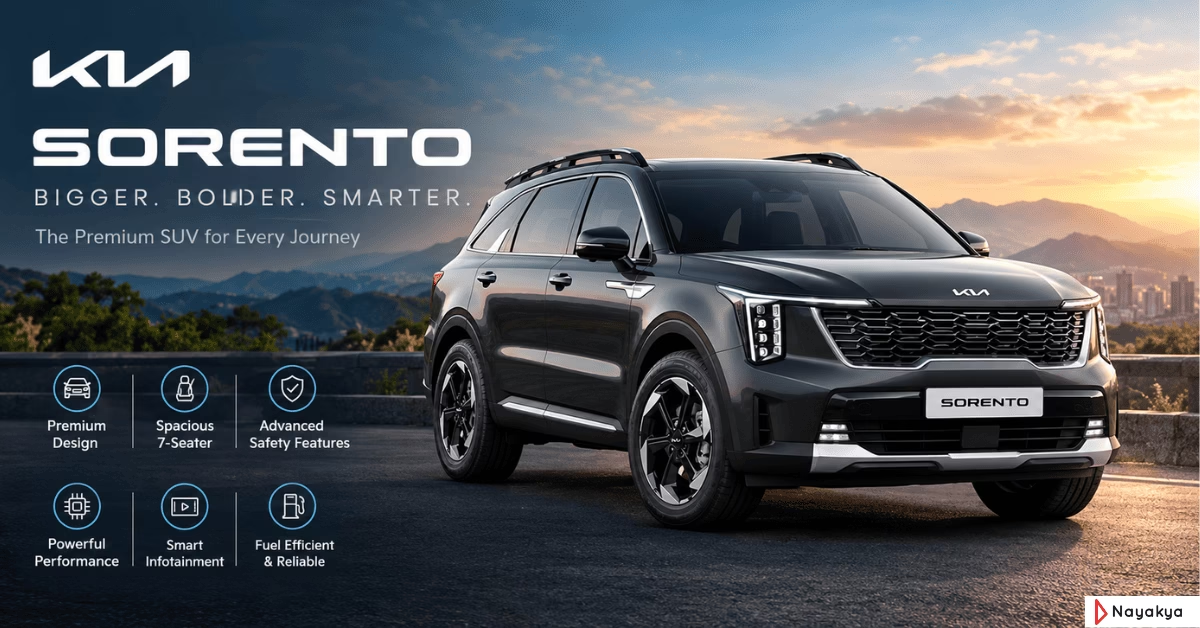
Kia Sorento Price in India, Features & Specs 2026
Explore the Kia Sorento price in India, hybrid and diesel engines, mileage information, features, safety, variants and key things to know before buying.
Kia Sorento 2026: Price in India, Features, Specifications, Mileage and Review
The Kia Sorento brings a combination of three-row practicality, modern technology and a choice of hybrid and diesel powertrains to India’s premium SUV market. With six- and seven-seat configurations, advanced driver-assistance features and a cabin designed around comfort, it targets buyers who want more than a conventional family SUV.
Kia announced the Sorento’s Indian launch for 4 September 2026, with local production at its Anantapur facility. The Indian lineup includes diesel and strong-hybrid options, while higher variants offer equipment such as a panoramic curved display, ventilated rear seats, a head-up display and Kia’s generative-AI-powered voice assistant.
But does the Sorento make sense for Indian families? Its price, powertrain choices, seating flexibility and technology make it worth considering, although buyers should also evaluate third-row comfort, fuel economy and the features included in their preferred variant.
This guide covers the major details you should know before shortlisting the Kia Sorento.

Kia Sorento 2026: Quick Overview
The Kia Sorento is a premium three-row SUV positioned for buyers who want a more sophisticated family vehicle with modern comfort and connectivity features.
| Specification | Kia Sorento India |
|---|---|
| Body type | Premium three-row SUV |
| Seating capacity | 6 or 7 occupants |
| Powertrain options | Strong-hybrid petrol and diesel |
| Hybrid engine | 1.6-litre turbo-petrol hybrid |
| Diesel engine | 2.2-litre diesel |
| Hybrid transmission | 6-speed automatic |
| Diesel transmission | 8-speed dual-clutch automatic |
| Drive configurations | Front-wheel drive and all-wheel drive, depending on variant |
| Length | 4,815 mm |
| Width | 1,900 mm |
| Height | 1,785 mm |
| Wheelbase | 2,820 mm |
| Key technology | Panoramic displays, Kia AI Assistant and connected-car features |
| Safety equipment | Up to 10 airbags and advanced driver assistance, depending on trim |
Specifications and equipment are based on Kia India’s published Sorento information and its variant comparison. Features may differ by trim, so buyers should verify the exact configuration before booking.

What Is the Kia Sorento Price in India?
As of October 2026, the Kia Sorento is listed in India with introductory ex-showroom prices starting at approximately ₹27.99 lakh. The upper end of the range reaches approximately ₹40.39 lakh, depending on the powertrain, seating layout, trim and equipment. These are ex-showroom figures, not final on-road prices.
The final amount you pay will depend on your city, registration charges, insurance, applicable taxes and optional accessories.
What affects the Kia Sorento’s price?
Several factors can change the purchase price:
-
Powertrain: The diesel and strong-hybrid petrol configurations use different engine and transmission combinations.
-
Seating layout: Buyers can choose between six-seat and seven-seat versions in eligible variants.
-
Trim level: Higher variants add comfort, convenience, connectivity and driver-assistance equipment.
-
Drive system: All-wheel-drive availability depends on the selected configuration.
-
Exterior package: Black Line styling is offered in selected configurations.
Kia’s official comparison page provides variant-level equipment information, while its dealership can confirm the current price and stock for a particular combination.
Buyer tip: Do not compare two Sorento variants using only their starting prices. Check whether the price difference buys equipment you will genuinely use, such as rear-seat ventilation, a head-up display, additional driver assistance or all-wheel drive.
Also request a written on-road quotation. An ex-showroom price alone does not tell you the total cost of ownership.
Features of Kia Sorento
Kia Sorento Design: Bold Styling with a Premium Presence
The Sorento’s exterior follows Kia’s modern SUV design language, with a prominent front grille, distinctive lighting, a broad body and a tall stance. Its styling is more substantial than that of a typical compact SUV, which helps establish its premium-family-SUV identity.
Front design
The front end features Kia’s Digital Tiger Face design, with a bold grille and distinctive LED lighting elements. The lighting signature helps the vehicle stand out, while the relatively upright front gives it a strong road presence.
The actual lighting and trim details can vary across the range. Buyers considering a base variant should compare it directly with the higher trims rather than assume every exterior feature is standard.
Side profile
The Sorento’s long body and 2,820 mm wheelbase provide the foundation for its three-row cabin. Roof rails, alloy wheels and body-side detailing contribute to its SUV character.
Its overall dimensions are also worth considering before buying. In a crowded urban parking space, a vehicle measuring 4.8 metres long and 1.9 metres wide will require more care than a compact crossover.
Rear design
The rear features a distinctive LED tail-lamp arrangement, an integrated spoiler and a clean, upright tailgate design.
For family users, the tailgate is more than a styling element. Check its opening height and the loading lip during a showroom visit, particularly if you frequently carry suitcases, shopping bags or children’s equipment.
Is the Kia Sorento Black Line different?
Yes. Kia’s Black Line treatment introduces a darker exterior appearance through selected black-finished design elements, including grille detailing, badges, wheel styling and other trim components. Availability depends on the specific variant.
The standard styling and Black Line versions appeal to different tastes. The former offers a more conventional premium appearance, while the latter suits buyers who prefer a darker, sportier look.
Kia Sorento Interior and Comfort Features

The interior is one of the Sorento’s major selling points. Its feature set is designed around comfort, digital displays, seating flexibility and convenience for longer journeys.
Dual-screen dashboard
The Sorento offers a 12.3-inch HD touchscreen and a 12.3-inch digital instrument cluster in the specified configurations. Together, these displays create a modern dashboard layout for vehicle information, infotainment and navigation.
A large display can make information easier to access, but the quality of the interface matters just as much as screen size. During a test drive, check how quickly you can change climate settings, navigate menus and access commonly used controls.
Panoramic sunroof
The panoramic sunroof adds natural light and makes the cabin feel more open. It is particularly appealing to families who enjoy long drives.
However, buyers in hot Indian cities should also check the effectiveness of the cabin’s cooling system and sunshade. A sunroof is a comfort feature, not a substitute for effective air conditioning.
Powered front seats
Selected configurations offer power-adjustable front seats, including a 10-way powered driver’s seat. Higher trims add further comfort-related functions.
Seat comfort is subjective. If you regularly drive for several hours, spend time checking lumbar support, thigh support, steering-wheel adjustment and visibility before choosing a variant.
Ventilated seats and rear comfort
Front-seat ventilation is available, while selected higher configurations offer ventilated second-row seats. The Sorento also offers a premium sound system and additional comfort equipment in specified trims.
These features matter in different ways:
-
Front ventilation can improve comfort during hot-weather driving.
-
Rear ventilation is valuable when adults frequently travel in the second row.
-
A premium sound system improves the entertainment experience on longer journeys.
-
A powered tailgate reduces the effort required when loading luggage.
Check the equipment list for the exact variant. A feature advertised for the Sorento range may not be included on every model.
Kia Sorento Seating: Is It a Good Family SUV?
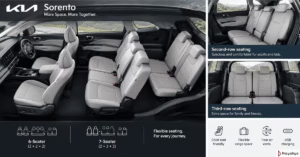
The Sorento is offered in six- and seven-seat configurations, making seating layout an important part of the buying decision.
Six-seater configuration
A six-seat layout typically uses two individual seats in the second row. This can provide a more separate, lounge-like experience for rear passengers.
It may be a good fit if your family regularly travels with four or five people and values individual seating comfort.
Before buying, check access to the third row. The ease of entering and exiting the rearmost seats can be more important than the number of cupholders or screens.
Seven-seater configuration
The seven-seat version is more suitable for families that need an additional passenger seat.
It provides greater seating flexibility, but the usefulness of the third row depends on passenger height, journey length and the number of people travelling.
What about third-row comfort?
A three-row SUV does not automatically offer adult-sized comfort in all three rows.
An independent review of the India-spec Sorento identified the third row’s knees-up seating position as a limitation, particularly for adults.
For occasional school runs or shorter journeys, the third row may be perfectly adequate for children. For frequent trips with seven adults, test all three rows with the intended passengers before committing.
Boot space and luggage
Passenger capacity and luggage capacity must be considered together. When all seats are occupied, the available luggage area may be more restricted than it is with the third row folded.
Try a practical loading test at the dealership. Bring representative luggage or measure your regular suitcases and check whether they fit with the seats in your usual configuration.
For family road trips, this simple exercise can reveal more than a brochure photograph.
Kia Sorento Engine and Performance
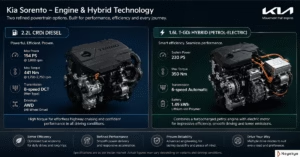
One of the Sorento’s most significant advantages is its choice of powertrains. Buyers can choose a strong-hybrid petrol system or a conventional diesel engine, with different transmission and drivetrain combinations depending on the variant.
1.6-litre turbo-petrol strong hybrid
The hybrid combines a 1.6-litre turbocharged petrol engine with an electric motor and battery system.
According to published India-specification information, the petrol engine produces approximately 180 hp and 265 Nm, while the electric motor is rated at approximately 65 hp and 264 Nm. These are individual component ratings; they should not simply be added together to calculate the system’s combined output.
The hybrid is paired with a six-speed automatic transmission.
Why consider the hybrid?
-
It can use electric assistance during driving.
-
It may reduce petrol consumption in suitable driving conditions.
-
It offers an alternative to a diesel engine for buyers who prefer petrol-hybrid technology.
-
The automatic transmission suits drivers who spend significant time in urban traffic.
Actual fuel economy depends on traffic, speed, climate-control use, driving style, load and route. Do not assume a published international mileage figure applies to the Indian model.
The hybrid is particularly worth considering if your driving includes stop-start city traffic and you want a balance of performance and potential fuel savings.
2.2-litre diesel engine
The Sorento’s diesel powertrain uses a 2.2-litre engine producing approximately 193 hp and 442 Nm of torque, paired with an eight-speed dual-clutch automatic transmission, according to published India-specification data.
The diesel’s torque output is useful when carrying passengers, accelerating at highway speeds and driving with a full cabin.
It may suit buyers who regularly cover long distances or prefer the low-speed pulling characteristics of a diesel engine.
However, the right choice depends on annual kilometers, driving patterns, fuel prices, maintenance expectations and the price difference between equivalent variants.
Hybrid vs diesel: Which should you choose?
| Consideration | Strong-hybrid petrol | Diesel |
|---|---|---|
| Engine type | 1.6-litre turbo-petrol hybrid | 2.2-litre diesel |
| Transmission | 6-speed automatic | 8-speed dual-clutch automatic |
| Published engine output | Approx. 180 hp | Approx. 193 hp |
| Published engine torque | 265 Nm | 442 Nm |
| Likely appeal | City use and buyers interested in hybrid efficiency | Frequent highway use and buyers who value diesel torque |
| Main question | How much fuel can the hybrid save in your driving conditions? | Will your annual usage justify the diesel’s purchase and running costs? |
The table compares published engine figures and general powertrain characteristics. It is not a substitute for a back-to-back test drive or a verified fuel-economy test.
Kia Sorento Mileage: What Should Indian Buyers Expect?
Mileage is one of the most important factors when evaluating a premium SUV, especially when it may be used for daily commuting as well as family travel.
However, a reliable India-spec mileage figure should come from a clearly identified test or official declaration. A verified figure for the Indian variant should not be replaced with an overseas EPA estimate or a figure from a different Sorento powertrain.
What affects the Sorento’s fuel economy?
Several factors influence real-world consumption:
-
Traffic: Stop-start urban driving can affect fuel use differently from steady highway cruising.
-
Driving style: Hard acceleration, late braking and high cruising speeds generally increase consumption.
-
Passenger and luggage load: Carrying more weight can increase energy demand.
-
Air conditioning: Heavy cooling demand in hot weather can affect consumption.
-
Tires and maintenance: Incorrect tyre pressure and poor maintenance can reduce efficiency.
-
Route and terrain: Hilly roads and repeated acceleration can change the result.
Is the hybrid always more economical?
Not necessarily in every situation. Hybrid systems can be particularly helpful in some urban driving conditions, but the actual difference depends on the vehicle, route and driver.
A fair comparison should use equivalent variants, the same route, similar traffic conditions and the same measurement method.
Kia Sorento Technology and Connectivity
The Sorento combines conventional convenience features with connected-car technology and a generative-AI voice assistant.
Kia AI Assistant
Kia India lists an AI Assistant with real-time generative-AI capabilities and voice-command functionality for the Sorento. The assistant is intended to support conversational interactions and provide real-time responses.
The technology is an interesting differentiator, but buyers should check its supported functions, connectivity requirements, language availability and subscription conditions before relying on it for everyday tasks.
The presence of an AI assistant does not mean that the vehicle can drive autonomously.
Connected-car functions
The Sorento’s equipment includes Kia Connect features and over-the-air software updates in specified configurations.
Connected functions can make vehicle ownership more convenient, but the available features may depend on variant, network coverage, software versions and service terms.
Digital convenience features
Selected variants include equipment such as a head-up display, digital inside rearview mirror, digital key functionality and powered tailgate
For a technology-focused buyer, the best approach is to test the features rather than judge the cabin solely by its screen count. Check the responsiveness of the touchscreen, visibility of the instrument display in sunlight and ease of use while the vehicle is stationary.
Kia Sorento Safety Features
Safety deserves particular attention in a large family SUV because the vehicle may carry several occupants on highways and in city traffic.
Kia’s published Sorento information includes up to 10 airbags, electronic stability control, hill-start assist, a 360-degree camera and advanced driver-assistance features, with equipment varying by trim. The higher configurations advertise Level 2+ ADAS with additional assistance functions.
Airbags and stability systems
Airbags are an important part of a vehicle’s passive safety system. Electronic stability control helps the driver maintain control in certain situations where the vehicle begins to lose its intended path.
Neither feature eliminates the risk of an accident. Seat-belt use, suitable speed and safe driving remain essential.
When comparing variants, verify the number and location of airbags rather than assuming that all trims carry identical equipment.
ADAS and driver assistance
Advanced Driver Assistance Systems, or ADAS, use sensors and vehicle systems to support the driver in selected driving situations.
Depending on the configuration, features can include functions associated with collision avoidance, lane assistance and adaptive cruise control.
These systems have limitations. Road markings, weather, visibility, sensor conditions and surrounding traffic can affect how they operate. Drivers must remain attentive and ready to intervene.
Parking assistance
A 360-degree camera and parking sensors can help when maneuvering a large SUV through narrow streets or crowded parking facilities.
They are especially useful for buyers who regularly park in tight residential spaces. Nevertheless, camera views can distort distances, so drivers should check mirrors and surroundings as well.
What about crash-test ratings?
Do not treat the presence of airbags or ADAS as proof of a particular crash-test score. A crash rating applies to a specific tested vehicle and assessment protocol.
Before publishing a definitive rating for the India-spec Sorento, verify the exact result and applicable variant through the relevant crash-testing organization. A rating for a different market or specification should not automatically be transferred to the Indian vehicle.

Kia Sorento Dimensions and Practicality
The Sorento’s published dimensions are useful for assessing cabin proportions, parking requirements and general road presence.
| Dimension | Measurement |
|---|---|
| Length | 4,815 mm |
| Width | 1,900 mm |
| Height | 1,785 mm |
| Wheelbase | 2,820 mm |
Source: Kia India’s published specifications.
The long wheelbase helps create the packaging space needed for three seating rows. However, exterior dimensions alone cannot establish how comfortable each row will be.
Before purchasing, assess:
-
Whether all intended passengers can sit comfortably.
-
Whether third-row entry and exit are easy enough for your family.
-
Whether the boot accommodates luggage with all required seats in use.
-
Whether the vehicle fits your home parking space.
-
Whether its turning and parking characteristics suit your daily routes.
A premium SUV should be practical on ordinary weekdays, not only on open highways.
Kia Sorento Variants: Which One Makes Sense?
Kia India’s variant comparison lists HTE, HTE(O), HTK, HTK(A), HTX and HTX(A) grades, with different powertrain, seating and equipment combinations.
The following is a buyer-oriented way to evaluate the range rather than a claim that one variant is universally best.
Entry-level HTE
Consider the entry variant if your priorities are the basic Sorento package, three-row seating and the powertrain you need.
Before choosing it, check whether its standard safety equipment, parking aids, infotainment functions and comfort features are sufficient for your family.
Mid-range HTK
A mid-range variant can be worth considering if it adds features you use regularly without pushing the budget too far.
Compare the precise equipment list against the entry variant. A feature that looks small on paper may have considerable daily value if it improves parking, visibility or rear-seat comfort.
Higher HTX variants
Higher trims target buyers who want a more comprehensive equipment package, including selected premium comfort and technology features.
However, do not automatically assume the most expensive variant offers the best value. Assess which features you will use and whether the drivetrain configuration fits your roads and driving habits.
Six-seat or seven-seat model?
Choose the six-seat layout if second-row individual seating is a priority and you rarely need the extra passenger seat.
Choose the seven-seat configuration if you frequently carry an additional passenger and the seating arrangement meets your comfort needs.
The right choice depends on your regular passenger count, not simply the maximum number of seats advertised.

Kia Sorento vs Its Main Rivals
The Sorento competes in the premium three-row SUV category. Relevant alternatives include the Jeep Meridian, Skoda Kodiaq and Volkswagen Tyron, although their powertrains, seating layouts, prices and equipment differ.
Kia Sorento vs Jeep Meridian
The Meridian is an alternative for buyers who want a premium SUV with diesel-focused appeal and a more traditional adventure-oriented image.
The Sorento’s key point of difference is its combination of a strong-hybrid option, diesel powertrain, six- or seven-seat configurations and a feature-rich cabin.
The best choice depends on how you value fuel economy, seating comfort, off-road capability, equipment and driving character.
Kia Sorento vs Skoda Kodiaq
The Kodiaq is another premium family SUV worth considering. Buyers should compare the latest Indian specifications, engine performance, seating arrangements, comfort equipment and total purchase price.
The Sorento’s hybrid powertrain is an important differentiator for shoppers specifically interested in a strong-hybrid SUV.
Kia Sorento vs Volkswagen Tyron
The Tayron also targets buyers seeking a larger, premium family vehicle. Compare its actual India-spec equipment, powertrain, third-row usability and price against the Sorento rather than relying on overseas model specifications.
Which SUV is best?
There is no universal winner. The most appropriate choice depends on the family’s seating requirements, typical driving conditions, fuel preferences, parking environment and budget.
For a meaningful comparison, test-drive the shortlisted vehicles on similar routes and evaluate the same criteria in each one.
Kia Sorento Pros and Cons
The Sorento’s appeal comes from its combination of powertrain choice, technology and family-oriented packaging. Its compromises are mainly the practical considerations that come with a large, feature-rich three-row SUV.
Pros
-
Choice of strong-hybrid petrol and diesel powertrains.
-
Six- and seven-seat configurations.
-
Large digital displays and connected-car technology.
-
Advanced driver-assistance features on specified variants.
-
Premium comfort equipment, including selected ventilated-seat configurations.
-
Local production in India.
-
Distinctive exterior styling and a substantial road presence.
These strengths are based on Kia’s published equipment and specifications, along with its announced Indian production plans.
Cons and limitations
-
The third row may not be ideal for adults on long journeys.
-
A large body can make tight parking more challenging.
-
Higher-spec variants can represent a significant financial commitment.
-
Real-world fuel economy needs to be assessed for your own usage.
-
Advanced features vary by trim.
-
The most expensive variant is not necessarily the best value for every family.
The third-row limitation is supported by independent road-test commentary, while the other points are practical considerations buyers should assess before purchase.
Who Should Buy the Kia Sorento?
The Sorento may suit you if you want a premium three-row SUV and value a choice of hybrid or diesel powertrains.
It deserves a closer look if:
-
You regularly travel with family members and need more than five seats.
-
You want modern cabin technology and comfort equipment.
-
You prefer an automatic transmission.
-
You want to compare a hybrid against a diesel SUV.
-
You value the flexibility of six- and seven-seat configurations.
It may be less suitable if you mostly travel alone, need a compact vehicle for narrow streets or frequently carry seven adults over long distances without being able to test the third row first.
Buyers focused primarily on the lowest possible running costs should also calculate their expected annual fuel expenses rather than assuming a hybrid will always save enough to justify its purchase price.
Is the Kia Sorento Worth Buying in 2026?
The Kia Sorento makes a strong case for buyers who want a premium three-row SUV with modern technology and a choice between hybrid and diesel power.
Its strongest appeal is the combination of six- and seven-seat layouts, a well-equipped cabin, connected features and multiple powertrain choices. The hybrid option gives buyers an alternative to diesel, while the diesel engine’s torque may appeal to those who frequently undertake longer journeys.
The main questions are practical ones: how comfortable the third row feels for your family, which features you genuinely need, what fuel economy you achieve in your driving conditions and how much the selected variant costs on the road.
Final verdict:
The Kia Sorento 2026 is worth considering for buyers looking for a premium three-row SUV with modern technology, family-friendly features, and a choice between hybrid petrol and diesel powertrains. Its spacious cabin, digital displays, advanced safety features, and six- or seven-seat configurations make it an appealing option for families who value comfort and versatility.
The hybrid version may suit buyers who want a balance of performance and fuel efficiency, while the diesel variant could be a better fit for those who frequently travel long distances and prefer strong torque. However, the third-row comfort, real-world mileage, variant-specific features, and overall ownership costs deserve careful consideration before making a purchase.
Our recommendation: Shortlist the Kia Sorento if you need a feature-rich family SUV, but compare its price and equipment with competing models before booking. A thorough test drive and a clear understanding of your family’s seating requirements will help you decide whether it offers the right balance of comfort, practicality, and value for money.
FAQ
1. What is the price of the Kia Sorento in India?
The Kia Sorento’s reported introductory ex-showroom price starts at approximately ₹27.99 lakh, with higher configurations reaching approximately ₹40.39 lakh. Confirm the latest variant pricing and on-road cost with Kia India or an authorised dealer.
2. Is the Kia Sorento available in India?
Yes. Kia launched the Sorento in India in September 2026. The India-spec model is locally produced and offered with hybrid and diesel powertrain options.
3. Is the Kia Sorento a six-seater or seven-seater SUV?
The Sorento is offered in both six-seat and seven-seat configurations, depending on the selected variant. Check the second-row arrangement and third-row access before booking.
4. What engine options are available in the Kia Sorento?
The Indian model offers a 1.6-litre turbo-petrol strong-hybrid powertrain and a 2.2-litre diesel engine. The hybrid uses a six-speed automatic, while the diesel is paired with an eight-speed dual-clutch automatic.
5. What is the mileage of the Kia Sorento?
Real-world mileage depends on the powertrain, traffic, speed, driving style, load and climate-control use. Check for a verified India-spec fuel-economy figure rather than applying overseas mileage ratings to the Indian vehicle.
6. Does the Kia Sorento have all-wheel drive?
All-wheel drive is available on specified Sorento configurations. Availability depends on the chosen powertrain and variant, so confirm the drivetrain shown on your quotation.
7. What are the main safety features of the Kia Sorento?
Depending on the trim, equipment includes up to 10 airbags, electronic stability control, hill-start assist, a 360-degree camera and advanced driver-assistance features. Check the exact equipment list for the variant you intend to purchase.
8. Is the Kia Sorento good for long family trips?
It may suit families who want three seating rows, a choice of powertrains and premium comfort features. However, the third row may be less comfortable for adults on longer journeys. Test all rows with your regular passengers before deciding.
9. Which SUVs compete with the Kia Sorento?
Relevant alternatives include the Jeep Meridian, Skoda Kodiaq and Volkswagen Tayron. Compare current India-spec prices, seating configurations, engines, safety equipment and ownership costs before choosing.
10. Is the Kia Sorento hybrid better than the diesel version?
Neither is automatically better for every buyer. The hybrid may suit people interested in petrol-hybrid efficiency, particularly in suitable urban driving conditions. The diesel may appeal to frequent highway users who value its torque. Test both and compare total ownership costs using your annual driving distance.